Welcome to the world of system architecture, where complexity meets clarity. Whether you’re building a cloud platform or designing a microservices ecosystem, understanding system architecture is the key to scalable, resilient, and efficient systems. Let’s dive into what makes it so powerful.
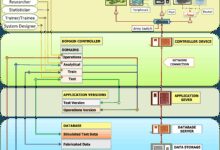





What Is System Architecture? A Foundational Understanding

At its core, system architecture defines the structure, behavior, and views of a system. It serves as a blueprint for both technical and business stakeholders, guiding how components interact, data flows, and services are orchestrated. Think of it as the architectural plan of a skyscraper—without it, even the strongest materials can’t prevent collapse.
Defining System Architecture in Modern Contexts
System architecture has evolved from monolithic mainframes to distributed cloud-native systems. Today, it encompasses not just hardware and software, but also networks, security, data pipelines, and user experience. According to the ISO/IEC/IEEE 42010 standard, architecture is the fundamental concepts or properties of a system in its environment, embodied in its elements, relationships, and principles of design and evolution.
- It defines how components communicate and integrate.
- It establishes constraints and standards for development teams.
- It enables scalability, maintainability, and fault tolerance.
Key Components of System Architecture
A robust system architecture includes several critical elements:
- Components: Modular units like services, databases, APIs, or microservices.
- Connectors: Communication channels such as HTTP, message queues, or gRPC.
- Configurations: How components are arranged and interconnected.
- Constraints: Rules governing performance, security, and compliance.
“Good system architecture doesn’t just solve today’s problems—it anticipates tomorrow’s challenges.” — Martin Fowler, Chief Scientist at ThoughtWorks
The Evolution of System Architecture Over Decades
Understanding the historical trajectory of system architecture helps us appreciate current best practices and future trends. From centralized computing to decentralized cloud ecosystems, the journey has been transformative.
From Mainframes to Client-Server Models
In the 1960s and 70s, system architecture was dominated by mainframe computers—centralized, powerful machines that handled all processing. Users accessed these via terminals with no local processing power. This model offered control and security but lacked flexibility.
The 1980s introduced the client-server model, where processing was split between clients (user devices) and servers (centralized hosts). This shift allowed for more interactive applications and distributed workloads. For example, early email systems and database applications leveraged this architecture.
Rise of Distributed and Cloud-Based Architectures
The 2000s saw the emergence of distributed systems, driven by the internet and enterprise needs. Systems were no longer confined to single locations; they spanned data centers across the globe. This era gave birth to service-oriented architecture (SOA), enabling interoperability between disparate systems.
With the advent of AWS in 2006, cloud computing revolutionized system architecture. Platforms like Amazon Web Services and Microsoft Azure enabled on-demand scalability, reducing the need for physical infrastructure. Today, cloud-native architectures using containers (e.g., Docker) and orchestration tools (e.g., Kubernetes) dominate modern design.
The Impact of DevOps and CI/CD on Architecture
DevOps practices have deeply influenced system architecture by promoting automation, continuous integration, and rapid deployment. Modern architectures must support CI/CD pipelines, infrastructure as code (IaC), and observability.
- Infrastructure is now defined in code (Terraform, Ansible).
- Microservices enable independent deployment cycles.
- Monitoring tools (Prometheus, Grafana) provide real-time insights.
Core Principles of Effective System Architecture
Building a successful system isn’t just about choosing the right technologies—it’s about adhering to foundational principles that ensure longevity, performance, and adaptability. These principles guide every decision in system architecture.
Scalability: Designing for Growth
Scalability refers to a system’s ability to handle increased load by adding resources. There are two types: vertical (scaling up) and horizontal (scaling out). In modern system architecture, horizontal scaling is preferred due to its flexibility and cost-efficiency.
For instance, Netflix uses a horizontally scalable microservices architecture to serve millions of users simultaneously. Their system automatically spins up new instances during peak hours, ensuring uninterrupted streaming.
- Use load balancers to distribute traffic.
- Design stateless services for easier replication.
- Leverage auto-scaling groups in cloud environments.
Reliability and Fault Tolerance
A reliable system continues to operate correctly even when parts fail. This is achieved through redundancy, failover mechanisms, and graceful degradation.
For example, Google’s global infrastructure uses multi-region replication. If one data center goes down, traffic is rerouted to another with minimal disruption. Techniques like circuit breakers (popularized by Martin Fowler) prevent cascading failures in microservices.
“The only thing worse than not having a backup is thinking you have one when you don’t.” — Unknown
Security by Design
Security should not be an afterthought. In modern system architecture, it must be embedded from the start. This includes encryption, identity management, network segmentation, and zero-trust models.
- Implement end-to-end encryption (TLS/SSL).
- Use role-based access control (RBAC).
- Regularly audit systems using tools like AWS Security Hub.
The OWASP Top Ten project provides a comprehensive guide to common security risks in web applications, many of which stem from poor architectural choices.
Common Types of System Architecture Patterns
Different problems require different architectural solutions. Over time, several patterns have emerged as industry standards. Each has strengths and trade-offs depending on the use case.
Monolithic Architecture: Simplicity vs. Limitations
In a monolithic architecture, all components of an application are tightly coupled and deployed as a single unit. This was the norm in early software development.
Advantages include simplicity in development and deployment. However, as the codebase grows, it becomes harder to maintain, test, and scale. A small change may require redeploying the entire application.
- Best for small teams or MVPs.
- Challenging to scale individual components.
- High risk of single point of failure.
Microservices Architecture: Modularity and Independence
Microservices break down an application into small, independent services that communicate via APIs. Each service owns its data and logic, enabling teams to develop, deploy, and scale independently.
Companies like Amazon and Uber use microservices to manage complex ecosystems. For example, Amazon’s retail platform consists of hundreds of microservices handling product listings, payments, recommendations, and logistics.
- Enables continuous delivery and deployment.
- Improves fault isolation.
- Increases operational complexity (monitoring, networking).
According to a 2018 NGINX survey, 68% of organizations were using or researching microservices, highlighting their growing adoption.
Event-Driven and Serverless Architectures
Event-driven architecture (EDA) relies on events to trigger and communicate between decoupled components. When a user places an order, for example, an event is published, and other services (inventory, billing, shipping) react accordingly.
Serverless computing, such as AWS Lambda or Azure Functions, takes this further by executing code in response to events without managing servers. This reduces overhead and scales automatically.
- Ideal for real-time processing and IoT applications.
- Reduces idle resource costs.
- Can introduce cold-start latency.
The Role of System Architecture in Cloud Computing
Cloud computing has redefined how we think about system architecture. Instead of fixed infrastructure, we now design for elasticity, global reach, and managed services.
Cloud-Native Design Principles
Cloud-native architecture leverages cloud computing to build and run scalable applications. The Cloud Native Computing Foundation (CNCF) promotes principles like microservices, containers, dynamic orchestration, and declarative APIs.
Key characteristics include:
- Containerization using Docker.
- Orchestration with Kubernetes.
- Service meshes (e.g., Istio) for traffic management.
- Immutable infrastructure for consistency.
Learn more at CNCF.io.
Multi-Cloud and Hybrid Architectures
Organizations are increasingly adopting multi-cloud strategies to avoid vendor lock-in and improve resilience. This involves using services from multiple providers (e.g., AWS, Azure, GCP).
Hybrid architectures combine on-premises infrastructure with cloud services. This is common in regulated industries like finance and healthcare, where data sovereignty is critical.
- Improves disaster recovery capabilities.
- Increases complexity in networking and security.
- Requires unified management tools (e.g., HashiCorp, Red Hat OpenShift).
Managing Costs and Performance in the Cloud
While the cloud offers flexibility, it can lead to uncontrolled costs if not managed properly. System architecture must include cost optimization strategies.
- Use reserved instances for predictable workloads.
- Implement auto-scaling to match demand.
- Monitor usage with tools like AWS Cost Explorer.
- Optimize data transfer costs with CDNs.
Performance tuning involves selecting the right instance types, caching strategies (Redis, Memcached), and database indexing.
Tools and Frameworks for Designing System Architecture
Designing system architecture isn’t just conceptual—it requires practical tools to model, visualize, and implement systems effectively.
Architecture Modeling and Diagramming Tools
Visualizing system architecture is crucial for communication and planning. Tools like Lucidchart, Draw.io, and Microsoft Visio allow architects to create detailed diagrams.
- Use UML (Unified Modeling Language) for component diagrams.
- Leverage C4 model (Context, Containers, Components, Code) for layered views.
- Integrate with Confluence or Notion for documentation.
The C4 model, created by Simon Brown, is gaining popularity for its clarity in explaining system architecture at different levels of abstraction.
Infrastructure as Code (IaC) Platforms
IaC allows teams to define infrastructure using code, enabling version control, repeatability, and automation. Popular tools include:
- Terraform: Multi-cloud provisioning by HashiCorp.
- AWS CloudFormation: Native to AWS.
- Ansible: Configuration management and orchestration.
Using IaC reduces human error and accelerates deployment cycles. For example, a Terraform script can spin up an entire VPC, EC2 instances, and load balancers in minutes.
Monitoring and Observability Solutions
Even the best-designed system architecture can fail without proper monitoring. Observability goes beyond monitoring—it’s about understanding system behavior through logs, metrics, and traces.
- Prometheus: Open-source monitoring and alerting toolkit.
- Grafana: Visualization platform for metrics.
- Jaeger: Distributed tracing for microservices.
- Datadog: Commercial observability platform.
These tools help detect anomalies, troubleshoot issues, and optimize performance.
Best Practices for Building Scalable System Architecture
Following best practices ensures your system architecture remains robust, maintainable, and future-proof. These guidelines are drawn from real-world experiences of leading tech companies.
Adopt a Modular Design Approach
Modularity is the cornerstone of scalable architecture. By breaking systems into loosely coupled components, you enable independent development and deployment.
- Apply the Single Responsibility Principle (SRP).
- Use APIs to define clear contracts between modules.
- Avoid circular dependencies.
Prioritize API Design and Contract Management
APIs are the glue that holds modern system architecture together. A well-designed API is intuitive, consistent, and versioned.
- Use REST or GraphQL based on use case.
- Document APIs using OpenAPI (Swagger).
- Enforce rate limiting and authentication.
Tools like Postman and Swagger UI help teams test and collaborate on APIs.
Implement Robust Data Management Strategies
Data is at the heart of every system. Your architecture must handle data storage, processing, and governance effectively.
- Choose the right database: SQL for structured data, NoSQL for scalability.
- Implement data replication and backup policies.
- Use message brokers (Kafka, RabbitMQ) for asynchronous processing.
- Ensure compliance with GDPR, HIPAA, etc.
For example, LinkedIn uses Apache Kafka to manage trillions of messages daily, powering real-time feeds and recommendations.
Future Trends Shaping System Architecture
The field of system architecture is constantly evolving. Emerging technologies and shifting user expectations are driving innovation in how we design systems.
AI-Driven Architecture and Autonomous Systems
Artificial intelligence is beginning to influence system architecture. AI can optimize resource allocation, predict failures, and even generate code.
Google’s DeepMind has been used to reduce data center cooling costs by 40%. In the future, AI may dynamically reconfigure architectures based on real-time load patterns.
- AI-powered anomaly detection in logs.
- Self-healing systems that auto-remediate issues.
- Predictive scaling based on usage trends.
Edge Computing and Decentralized Architectures
As IoT devices proliferate, edge computing brings processing closer to the data source. This reduces latency and bandwidth usage.
For example, autonomous vehicles cannot rely on cloud servers for split-second decisions. Instead, they process data locally using edge nodes.
- Reduces dependency on central data centers.
- Improves real-time responsiveness.
- Introduces challenges in security and management.
Quantum Computing and Its Long-Term Implications
While still in infancy, quantum computing promises to solve problems intractable for classical computers. It could revolutionize cryptography, optimization, and simulation.
Future system architecture may need to account for hybrid quantum-classical systems. Companies like IBM and Google are already experimenting with quantum processors.
- Threatens current encryption standards (RSA, ECC).
- Demands new architectural paradigms for error correction.
- Will require specialized software and hardware integration.
Case Studies: Real-World System Architecture Successes
Theory is important, but real-world examples show how system architecture delivers tangible results. Let’s examine a few industry leaders.
Netflix: Scaling Microservices at Global Level
Netflix serves over 200 million subscribers worldwide. Its system architecture is built on AWS and consists of thousands of microservices.
Key features:
- Chaos Monkey for resilience testing.
- API gateway to route requests.
- Real-time monitoring with Atlas and Kayenta.
Their architecture allows rapid innovation while maintaining high availability.
Amazon: From Monolith to Service-Oriented Empire
Amazon started as a monolithic e-commerce site. As it grew, the architecture became a bottleneck. In the early 2000s, they transitioned to a service-oriented architecture (SOA), later evolving into microservices.
This shift enabled teams to own their services end-to-end, leading to faster development cycles and greater scalability.
- Each team acts like a mini-startup.
- Services communicate via well-defined APIs.
- Internal platform teams provide shared infrastructure.
Spotify: Squad Model and Backend Architecture
Spotify uses a unique organizational model—“squads, tribes, chapters, and guilds”—aligned with its system architecture.
Each squad owns a feature area and its backend services. This autonomy fosters innovation while maintaining architectural coherence through shared standards.
- Uses a mix of Java, Python, and Node.js.
- Leverages Google Cloud Platform.
- Employs event-driven communication via Kafka.
This blend of cultural and technical architecture has made Spotify highly adaptable.
What is system architecture?
System architecture is the conceptual structure and functional organization of a system. It defines how components interact, how data flows, and how the system meets technical and business requirements. It serves as a blueprint for development, operations, and future evolution.
Why is system architecture important?
It ensures that a system is scalable, reliable, secure, and maintainable. Poor architecture can lead to performance bottlenecks, security vulnerabilities, and high technical debt. Good architecture enables agility and long-term success.
What are the main types of system architecture?
The main types include monolithic, microservices, event-driven, serverless, and service-oriented architectures (SOA). Each has specific use cases, trade-offs, and implementation patterns.
How do you design a good system architecture?
Start by understanding requirements, constraints, and scalability needs. Use proven patterns, prioritize modularity and security, and leverage tools like IaC and observability platforms. Iterate based on feedback and real-world performance.
What tools are used in system architecture?
Common tools include diagramming software (Lucidchart, Draw.io), IaC platforms (Terraform, CloudFormation), and monitoring solutions (Prometheus, Grafana). Frameworks like the C4 model help structure architectural documentation.
In conclusion, system architecture is not just a technical exercise—it’s a strategic discipline that shapes the success of digital products and platforms. From foundational principles like scalability and security to modern patterns like microservices and serverless, the choices made during architectural design have long-lasting impacts. By learning from industry leaders, adopting best practices, and staying ahead of trends like AI and edge computing, organizations can build systems that are not only robust today but adaptable for tomorrow. Whether you’re designing a startup MVP or a global enterprise platform, investing in solid system architecture is the most powerful step you can take.
Recommended for you 👇
Further Reading: